My Why: Casandra's School Choice Story

January 29, 2026

Casandra Meguiar, Development Manager, shares why she supports school choice for all Alabama families.


In high school, I started each morning walking through a metal detector and being sniffed by K-9 units before heading to homeroom. Teachers sat at their desks in silence while the class erupted in chatter. Other times, teachers gave us 50-page worksheet packets and sat in the back of the classroom reading a book. With nearly 30+ students in each class, we were lucky if we got through roll call without disruptions. Lunch was the worst, as the entire school went on lunch for an entire hour—an hour of courtyard brawls, lunches being stolen, classrooms defaced, and gun threats.


I had always loved school, but I began to dread it. I needed smaller class sizes. I needed teachers who cared. I went to my school counselors to see if I could be switched to the IB program. Those students had smaller class sizes and seemed to be a community. Despite my A/B honor roll grades, my counselor insisted that it would be too challenging for me and to stick with standard classes.


Stuck in disruptive classrooms, I worked diligently to ensure that my grades didn’t slip, but they slowly fell from A/B honor roll to average. Determined to get out of the school that didn’t serve my needs, I begged my dad to put me in a different school. My school wasn’t working for me. Private school was not an option for us as a low-income family of six. Magnet schools were either full or had a waitlist. Taking my pleas seriously, my father found a solution. It wasn’t ideal, but it would get me into a better school.


My father gave my grandparents Power of Attorney over me, and I moved into their home. This bittersweet solution allowed me to receive a better education at the public school in their school district, where I graduated cum laude with 12 college credits. I know that it was the right choice for my education, but the system was broken. My education may have been free, but there was a cost. I missed my siblings, and even though blood isn’t a bond that distance can erase, the distance has never seemed to heal itself, even now.


On a nearly weekly basis, families call with stories that remind me of my own. Parents searching for opportunities to help their children escape a failing school district. Whether the child is being bullied, not able to learn in an over-crowded classroom, or isn’t receiving the help they need, there should be an option for these families to go somewhere—an option that can help their child thrive in school instead of passively floating through the system. That’s why I do this work. I do it for the families that need this, who wouldn’t likely have this opportunity without our work. If there had been a program like AOSF when I was in school, maybe we could have found a different solution. A solution that didn’t cost so much. One that could have kept a family under the same roof. 

A mom helping child with school work at a kitchen table, with a laptop and pencil cup nearby
August 17, 2026
We want to hear from Alabama homeschool families as AOSF explores how a new homeschool fund could better support their educational needs.
August 10, 2026
Earlier this year, our Operations Manager Abbie Schofield shared her “why” for school choice . Now, as a mother navigating a housing market where a home’s school zone can be just as important as its price or location, she has a new perspective to share. Her story is a reminder that school choice isn’t about whether a school is “good” or “bad.” It’s about finding the environment where a particular child can feel safe, supported and capable of learning, and giving parents the freedom to choose it. I grew up in a small city with a fantastic public school system. Every teacher I had was kind, loving, and dedicated. Still, all I wanted to do was leave. In elementary school, I came home crying, begging my parents to send me to a local private school where my church friends went. I was bullied consistently to the point that school felt unbearable. I couldn't understand why I couldn't go—though I do now. It was a sacrifice my family simply couldn't afford. Had our state’s tax-credit scholarship program existed then, we would have qualified. Things eventually improved. I threw myself into academics and extracurriculars, graduating fourth in my class, Senior Class President, and Color Guard Captain. I worked part-time and took on every activity possible because I needed a scholarship to afford college. When an endowed scholarship ultimately made my dream of attending The University of Alabama affordable, it changed my life forever. Today, I manage finances and operations for the very scholarship program that could have changed my childhood. Every time I speak with a parent asking about our scholarships, I hear the same desperation I remember from my own mother—a longing for a happier, safer place for their child to learn. Now, as a mother, I find myself sitting on the other side of that table. My husband and I are currently house hunting to move closer to his job. Right down the road from one house we like sits an adorable home—$100,000 cheaper with significantly more square footage. But because it sits just across a boundary line, zoned for a different school track, I won’t even consider it. I am a parent with resources, a two-income household, and a career dedicated to navigating educational choices in our state. Yet I feel severely trapped by zip codes. I want the best public education for my son, who is in early intervention and will likely need an Individualized Education Program (IEP). Programs like the Alabama Accountability Act allow transfers out of failing school zones. But because the local elementary school isn't labeled "failing"—even if the middle or high school down the line is—transferring isn't an option. And even if neighboring public schools accepted transfers, a child requiring specialized IEP accommodations is rarely prioritized for open-enrollment slots. Meanwhile, stretching our budget to pay private school tuition on top of a mortgage would be a heavy financial burden. My husband and I are proud products of public K-12 schools and public universities. Some of my closest friends are public school teachers. They are deeply dedicated, overworked, and underpaid. They deserve far more support than they receive. But so do our children. Every parent deserves the ability to make educational choices that make their child feel safe, supported, and capable of learning. Sometimes a child needs a different environment not because a school is bad, but because their specific needs—whether ADHD, specialized learning, or safety—require a different fit. And when a school is failing, forcing a child to remain there for the sake of system optics or ADULT politics is indefensible. Our children deserve their best shot at their best possible future. The parents who know and love them best deserve the right to help get them there—regardless of their zip code or income.
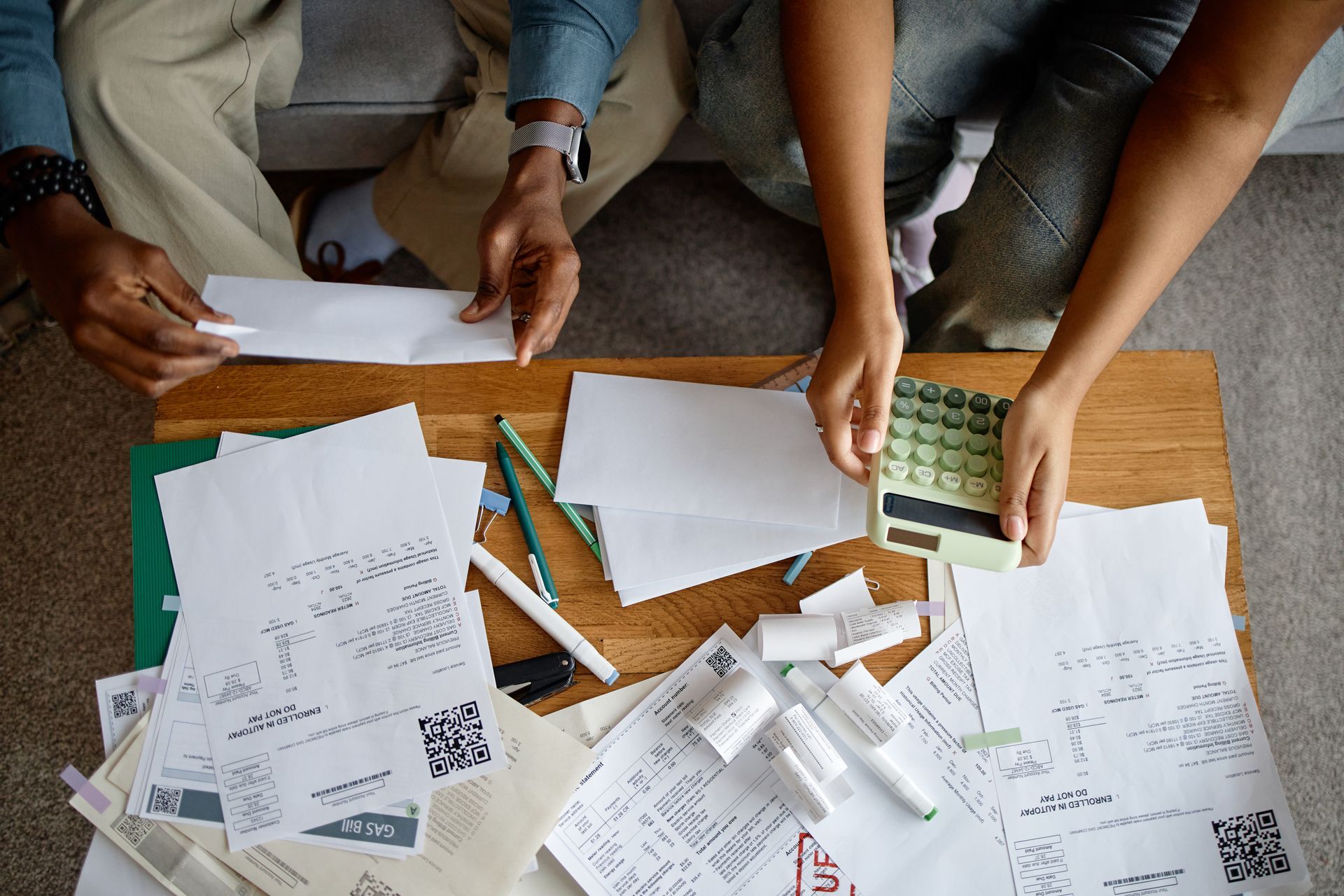
Hands working over paperwork and receipts on a wooden table with a calculator and pens
August 3, 2026
Nearly $38 million in tax credits remain. Learn how to support Alabama students by redirecting your state tax dollars through AOSF.
July 27, 2026
School choice in Alabama is expanding, giving families more opportunities to find the educational environment that best meets their child’s needs. But with new programs and updates happening quickly, it can be challenging to understand how each opportunity works and how they fit together. In the latest episode of Bama Knows Education, from Love Your School Alabama , we take a closer look at three key programs shaping the future of education in Alabama: the Alabama Accountability Act (AAA) Scholarship Program, the CHOOSE Act, and the new Federal Education Freedom Tax Credit.
School hallway lined with colorful backpacks and coats against the wall
July 22, 2026
Can Alabama AAA Scholarship donors choose a specific school? Learn how tax credit scholarship contributions work and how your donation supports students statewide.
Student writing at a classroom desk while classmates sit behind them, with colorful posters on the wall.
July 20, 2026
Starting in 2027, Alabama taxpayers can redirect up to $1,700 in federal tax liability to support K-12 scholarships through the Education Freedom Tax Credit.
a
July 14, 2026
Learn how the Alabama AAA Scholarship Program turns tax credits into educational opportunity.
July 1, 2026
For 250 years, freedom has opened doors. See how educational opportunity is helping Alabama families build brighter futures.
June 24, 2026
See how Alabama families, schools, and donors can benefit from the Education Freedom Tax Credit.
June 22, 2026
From student-run restaurants to workforce training, a new Montgomery microschool is redefining education.