August 10, 2026
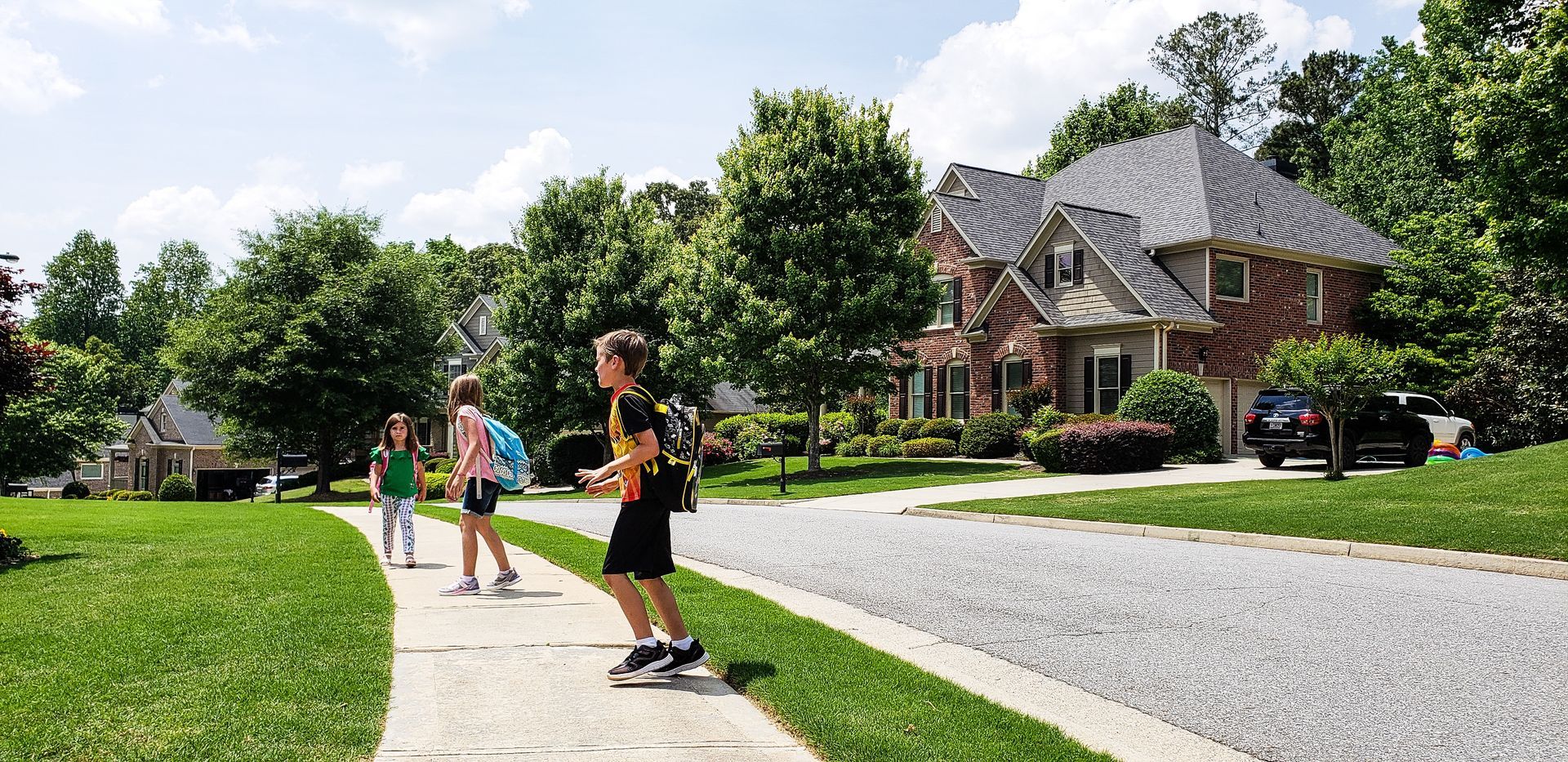
Earlier this year, our Operations Manager Abbie Schofield shared her “why” for school choice . Now, as a mother navigating a housing market where a home’s school zone can be just as important as its price or location, she has a new perspective to share. Her story is a reminder that school choice isn’t about whether a school is “good” or “bad.” It’s about finding the environment where a particular child can feel safe, supported and capable of learning, and giving parents the freedom to choose it. I grew up in a small city with a fantastic public school system. Every teacher I had was kind, loving, and dedicated. Still, all I wanted to do was leave. In elementary school, I came home crying, begging my parents to send me to a local private school where my church friends went. I was bullied consistently to the point that school felt unbearable. I couldn't understand why I couldn't go—though I do now. It was a sacrifice my family simply couldn't afford. Had our state’s tax-credit scholarship program existed then, we would have qualified. Things eventually improved. I threw myself into academics and extracurriculars, graduating fourth in my class, Senior Class President, and Color Guard Captain. I worked part-time and took on every activity possible because I needed a scholarship to afford college. When an endowed scholarship ultimately made my dream of attending The University of Alabama affordable, it changed my life forever. Today, I manage finances and operations for the very scholarship program that could have changed my childhood. Every time I speak with a parent asking about our scholarships, I hear the same desperation I remember from my own mother—a longing for a happier, safer place for their child to learn. Now, as a mother, I find myself sitting on the other side of that table. My husband and I are currently house hunting to move closer to his job. Right down the road from one house we like sits an adorable home—$100,000 cheaper with significantly more square footage. But because it sits just across a boundary line, zoned for a different school track, I won’t even consider it. I am a parent with resources, a two-income household, and a career dedicated to navigating educational choices in our state. Yet I feel severely trapped by zip codes. I want the best public education for my son, who is in early intervention and will likely need an Individualized Education Program (IEP). Programs like the Alabama Accountability Act allow transfers out of failing school zones. But because the local elementary school isn't labeled "failing"—even if the middle or high school down the line is—transferring isn't an option. And even if neighboring public schools accepted transfers, a child requiring specialized IEP accommodations is rarely prioritized for open-enrollment slots. Meanwhile, stretching our budget to pay private school tuition on top of a mortgage would be a heavy financial burden. My husband and I are proud products of public K-12 schools and public universities. Some of my closest friends are public school teachers. They are deeply dedicated, overworked, and underpaid. They deserve far more support than they receive. But so do our children. Every parent deserves the ability to make educational choices that make their child feel safe, supported, and capable of learning. Sometimes a child needs a different environment not because a school is bad, but because their specific needs—whether ADHD, specialized learning, or safety—require a different fit. And when a school is failing, forcing a child to remain there for the sake of system optics or ADULT politics is indefensible. Our children deserve their best shot at their best possible future. The parents who know and love them best deserve the right to help get them there—regardless of their zip code or income.