My Why: The Stories Behind School Choice

January 27, 2026

Meghan Presnell, Marketing Director, shares why she supports school choice for all Alabama families.


Imagine purchasing your first home, preparing to welcome your second child into the world—and then the housing market crashes. What was meant to be a small starter home suddenly looks like it might be your forever home. Fast forward three years, and it’s time to send your firstborn to kindergarten—except the school you’re zoned for is consistently failing. What should be an exciting milestone for a family is instead fraught with anxiety.


So we toured every elementary school we could, hoping the district would allow us to choose a better fit. In the end, our application was denied. That was my reality in 2012.


But giving up was never an option. For four exhausting months, I jumped through administrative hoops, made endless calls to district offices, and even recruited my mother-in-law—a former teacher and administrator in the district—to lean on her contacts. Eventually, midway through the kindergarten year, through public school choice, we landed at an elementary school that was right for our child.


That decision changed everything.


From that point forward, my children used school choice throughout their entire K–12 experience. In sixth grade, both transitioned to a small K–12 university lab school—an environment that offered opportunities simply not available to them otherwise. The school’s small size gave them access to opportunities much earlier than usual, including high school courses and dual enrollment college classes. Both of my children participated in sports and were exposed to JV and varsity athletics as early as middle school.


Academically and career-wise, the impact was just as profound. Through the lab school’s CNA program, my daughter earned her certification while still in school—an opportunity that directly led to a highly sought-after position in a hospital emergency room. The hands-on experience she gained there didn’t just build skills; it clarified her future, guiding her to major in Public Health with plans to attend P.A. school after graduation.  That’s not a “nice-to-have” outcome. That’s a life-altering one.


Sadly, very few parents have the time, resources, or insider knowledge to fight the way we did. That reality is exactly why I come to work each day and advocate for education opportunities for all children.


No family should feel anxious about sending their child to a school that’s a poor fit. No child should be assigned a future based solely on a zip code. For our family, we lost four months of kindergarten—a small fraction of a K–12 journey. But too many families across the country lose years of access to high-quality education their children deserve.


That’s unacceptable. We can do better. And I’m proud to devote my time and talents to making that happen.


October 20, 2026
Every child learns differently. Every family has different priorities. And finding the right educational environment often starts with understanding the options available. In Alabama, those options continue to expand. The Alabama Accountability Act (AAA) Scholarship Program has helped eligible students access private schools for more than a decade. The CHOOSE Act introduced education savings accounts, giving participating families more flexibility with qualifying educational expenses. And beginning January 1, 2027, the Education Freedom Tax Credit (EFTC) will create another opportunity to support students through scholarship-granting organizations. These programs serve different purposes, but together, they reflect a broader shift toward giving families more ways to pursue the education that works best for their children.
Three children with backpacks walking arm-in-arm down a school hallway
October 13, 2026
Two Alabama schools show how the right educational environment can help students with learning differences thrive.
Children sitting in a row, laughing and smiling in a bright classroom
October 5, 2026
EFTC gives Alabama schools a new opportunity to reach donors beyond state lines. Learn how school-directed contributions could expand support for scholarships.
Hands reviewing documents at a meeting table with coffee and a calculator
October 2, 2026
Treasury has issued new EFTC guidance. AOSF has reviewed the regulations and is ready for what’s next.
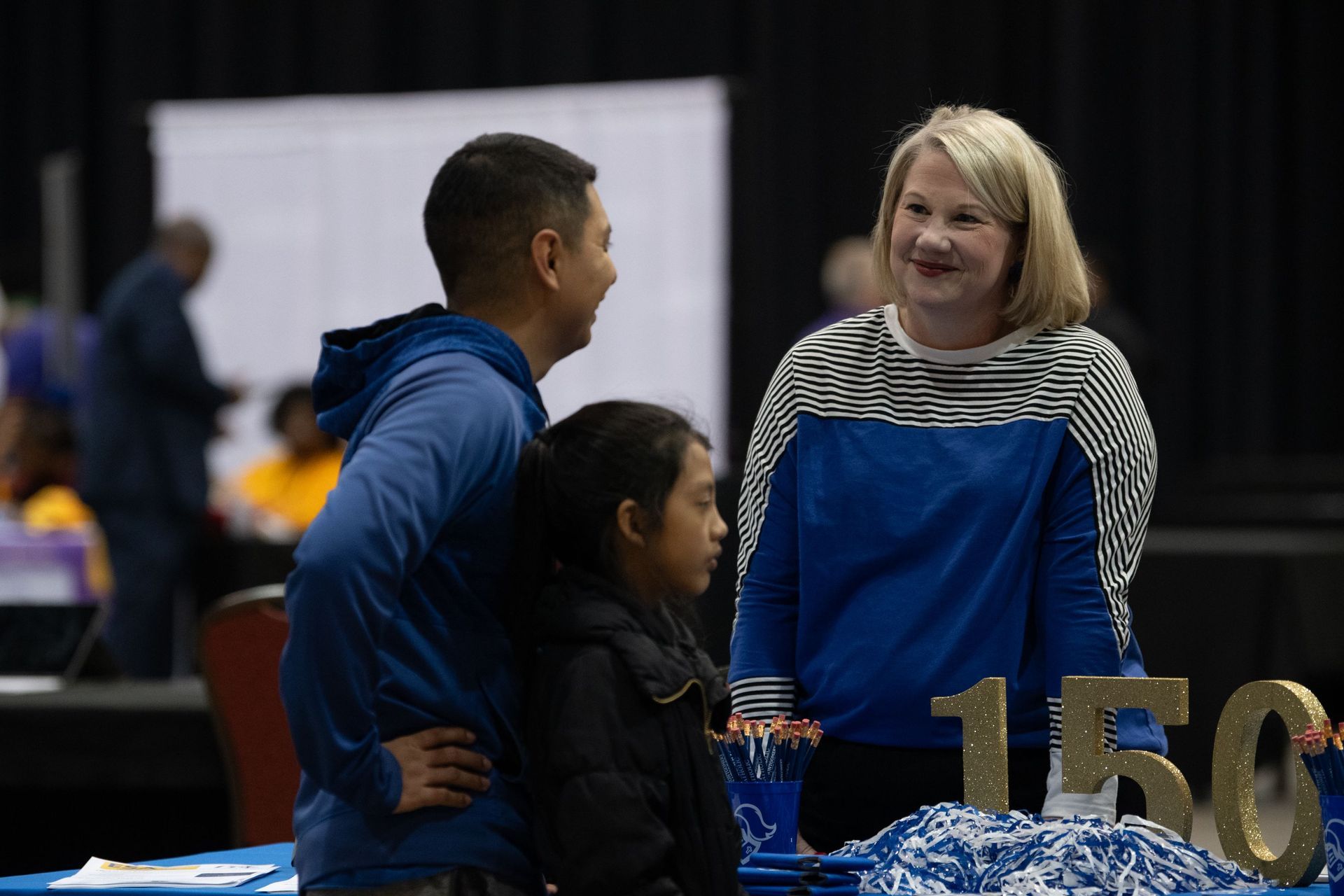
Three people talking at an indoor event table with a gold “150” display in the foreground.
September 28, 2026
Learn how the Education Freedom Tax Credit (EFTC) will expand school choice in 2027, including eligibility, scholarships and how EFTC funds can stack with AAA and CHOOSE Act funds.
Two people in navy shirts high-five in front of a brick wall.
September 21, 2026
A new Montgomery microschool is helping students find and utilize their gifts.
September 14, 2026
Discover how Alabama businesses can use tax credits to invest in students and help build the future of Alabama’s workforce.
September 8, 2026
Discover how school choice is giving Conecuh Springs families access to opportunity, community and an education that fits their children.
August 31, 2026
A mom is thankful for her daughter's education, made possible through a tax credit scholarship and Alabama Opportunity Scholarship Fund.
August 24, 2026
Parents don't change schools because they enjoy starting over. Changing schools can mean new routines, new teachers, new classmates and a whole new adjustment for a child. So when families make that decision, it's worth asking what is driving them to look for something different. Recent survey data from EdChoice and the National School Choice Awareness Foundation provide some answers. Together, the findings offer a clearer picture of what families experience when a school isn't meeting their child's needs and what they are looking for in a new educational environment.