Where Faith and Academic Excellence Meet in Auburn, Alabama
There’s a lingering misconception that private or Catholic schools aren’t equipped to serve students with disabilities. In Auburn, Alabama, one Catholic school is quietly proving otherwise.
As an AOSF partner school and the only Catholic school within a 50-mile radius, St. Michaels Catholic School is offering families something increasingly rare: strong academics, intentional faith formation, and a learning environment that welcomes students with a range of learning needs, including dyslexia, hearing impairments, and vision challenges.
And they’re not just “making it work.” They’re building a model designed for it.
A school built for students, not scale
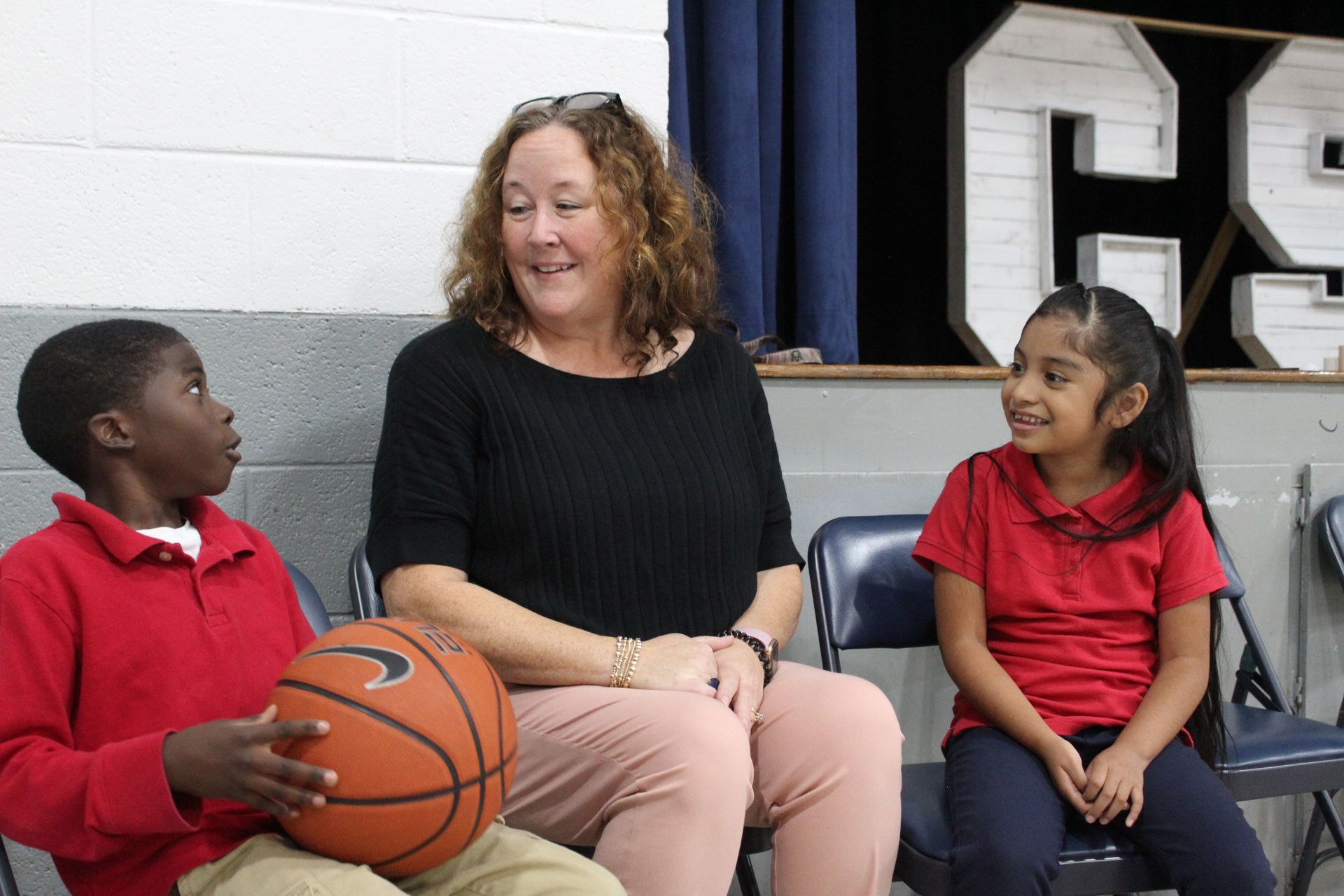
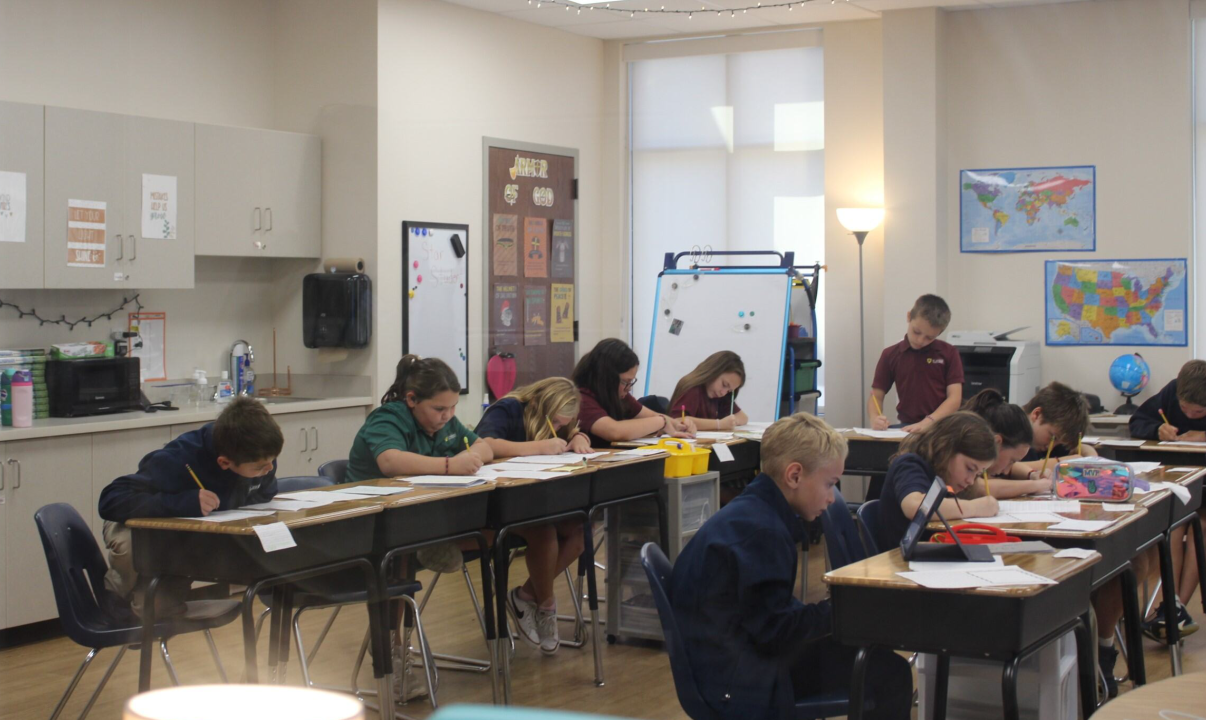
After decades in public education, Debbie Brooks, the school’s principal made a major shift—from leading a campus of roughly 500 students and 80 staff members to a much smaller, more intentionally structured school of about 100 students. That change, she says, transformed what’s possible.
With smaller class sizes—typically 16–18 students in lower grades and 18–20 in upper grades—teachers have space to actually know their students. Not just academically, but personally.
Teachers are able to adjust instruction, respond to learning needs in real time, and collaborate more closely on curriculum and student support. For families, it means fewer gaps fall through the cracks.
Yes, Catholic schools serve students with disabilities
The myth that Catholic schools do not enroll or support students with disabilities doesn’t hold up here. To support students with dyslexia specifically, teachers have been trained in Orton-Gillingham instruction—a structured, multisensory, phonetic approach widely recognized as effective for students with reading differences.
This is not a side effort or a special program tucked away in a corner of the school. It is part of the instructional approach.
And the philosophy behind it is clear. “It’s my belief that kids with a disability have the right, just as much as anyone else, to go to a private school if that’s what their parents want for them,” says Mrs. Brooks.
That belief is matched by staffing as well. The school currently employs former public school special education teachers who bring years of experience directly into the classroom, supporting both teachers and students with academic needs. The result is a school environment where support isn’t an exception, it’s part of the culture.
Learning shaped by structure, faith, and respect
Academics are only one part of the student experience. The school also integrates faith and character formation in intentional, daily ways.
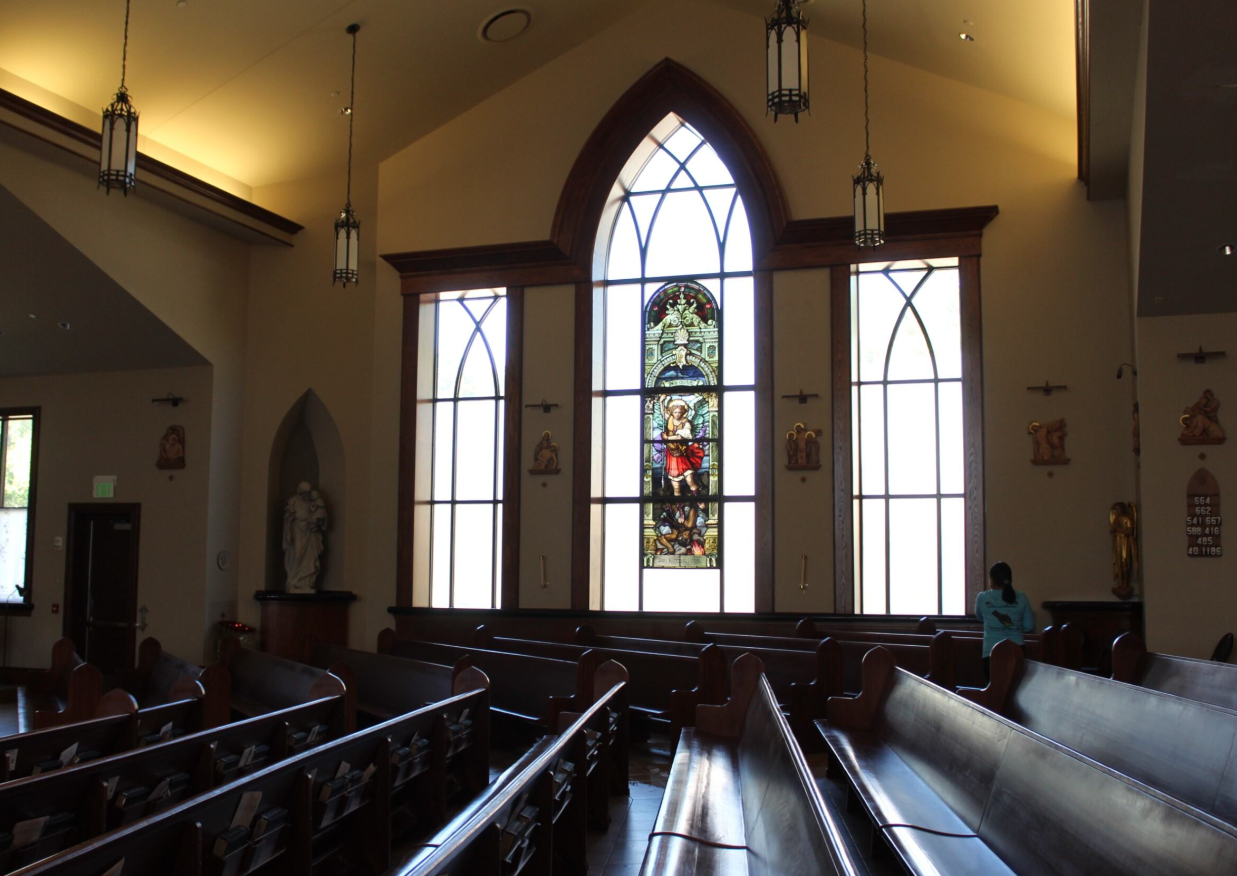
Every Wednesday, students attend Mass together. And through a long-standing tradition called the Atrium, students experience faith formation in a hands-on, developmentally appropriate environment rooted in reverence and reflection. “The idea behind this is you’re teaching children how to have a reverence for and respect for their faith in a hands-on way.”
Students remove their shoes, sit quietly on rugs, and engage with lessons that often include retelling Scripture, exploring maps of biblical places, or building mini altars. After instruction, they move quietly to independent exploration.
It’s structured, calm, and deeply intentional, helping students develop patience, self-control, and focus alongside their academic skills.
More than academics: a whole-child approach
Beyond core instruction, students also participate in music, art, Latin, and physical education—ensuring exposure to a well-rounded curriculum that supports different strengths and learning styles. They also begin learning cursive in second grade, reinforcing fine motor skills and cognitive development alongside literacy.
Why Auburn families are choosing this school
Located in a strong academic community shaped by the presence of a major university, Auburn offers families many educational options. Local public schools are highly regarded, and families often prioritize education when choosing where to live.
So what makes this Catholic school stand out? It’s not competition. It’s clarity of mission.
“Geographically, being the only Catholic school in the region within a 50-mile radius… having the opportunity to build something that is well respected and is a good alternative for a strong academic education here in Lee County,” explained Principal Brooks
That “alternative” is not about being different for the sake of it. It’s about offering families another path—one grounded in faith, academics, and individualized attention.
Making Catholic education more accessible
Through programs like the AAA scholarship, more families are finding that this option is no longer out of reach.
“I think it removes a barrier for many of our families who really want their children to have the opportunity to attend a faith-based school… These are tough times… if we could remove that one barrier, it allows parents to have an easier opportunity to have that decision.”
For Mrs. Brooks, the value proposition of Catholic education goes far beyond academics. “When you put children in school here, you are really investing in not only their academic education, but you are investing in their soul. It’s an investment in your child’s soul.”
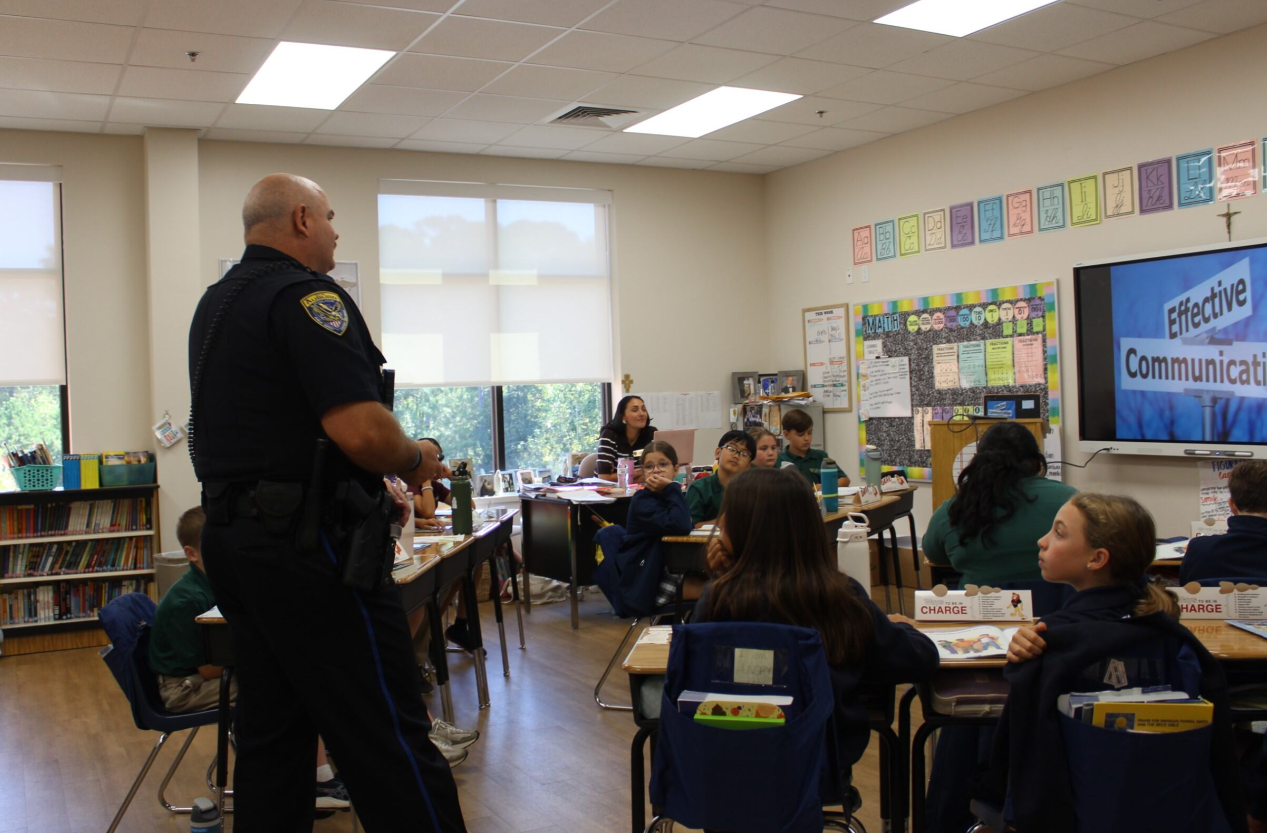
Learning communication skils from local leaders.
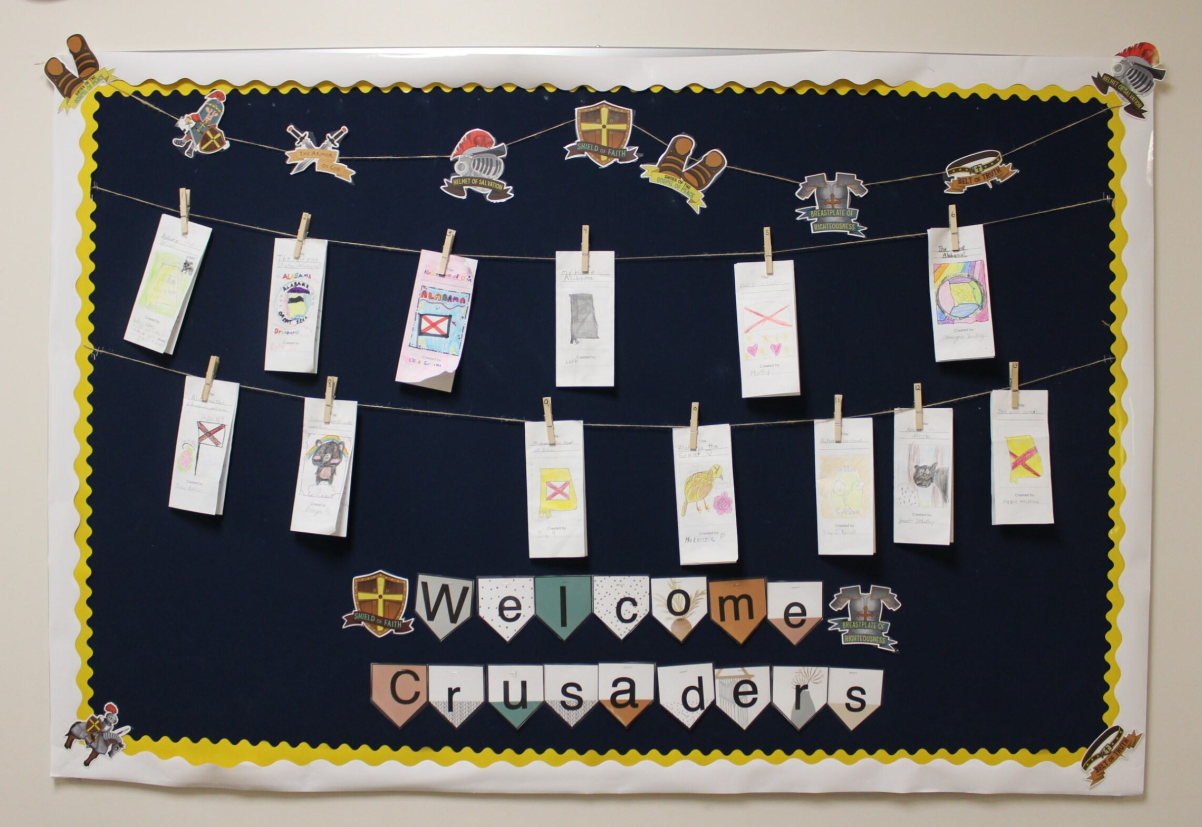
Welcome to St. Michaels
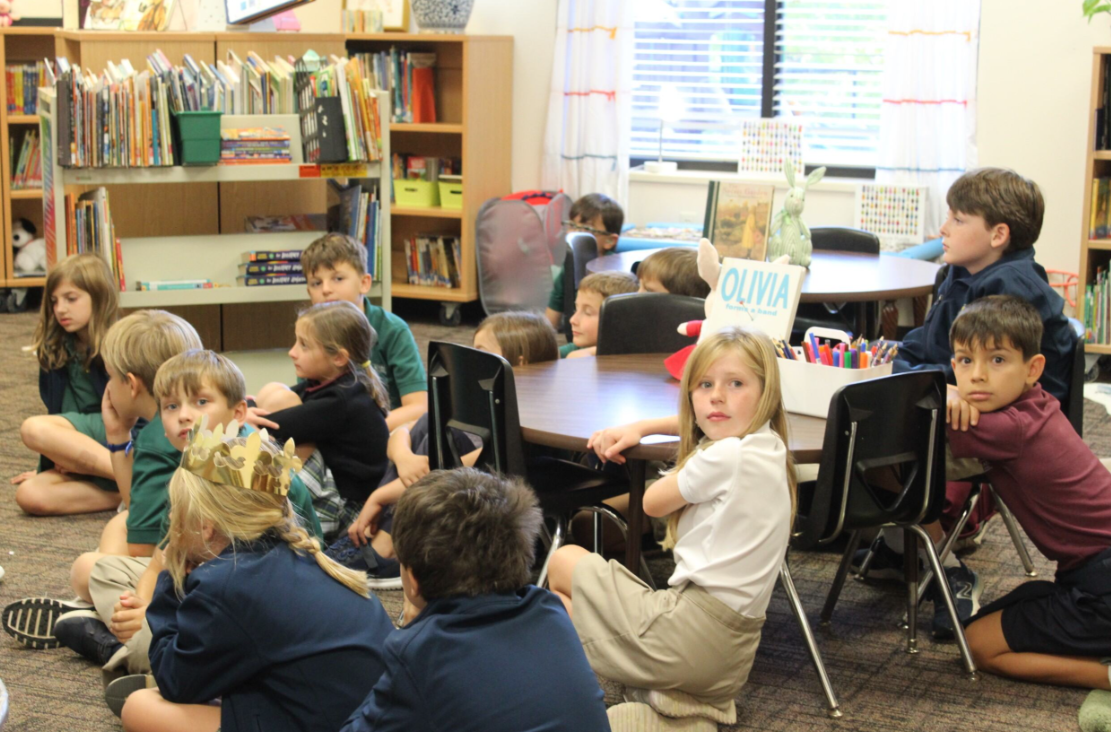
Students enjoying a story in the library.
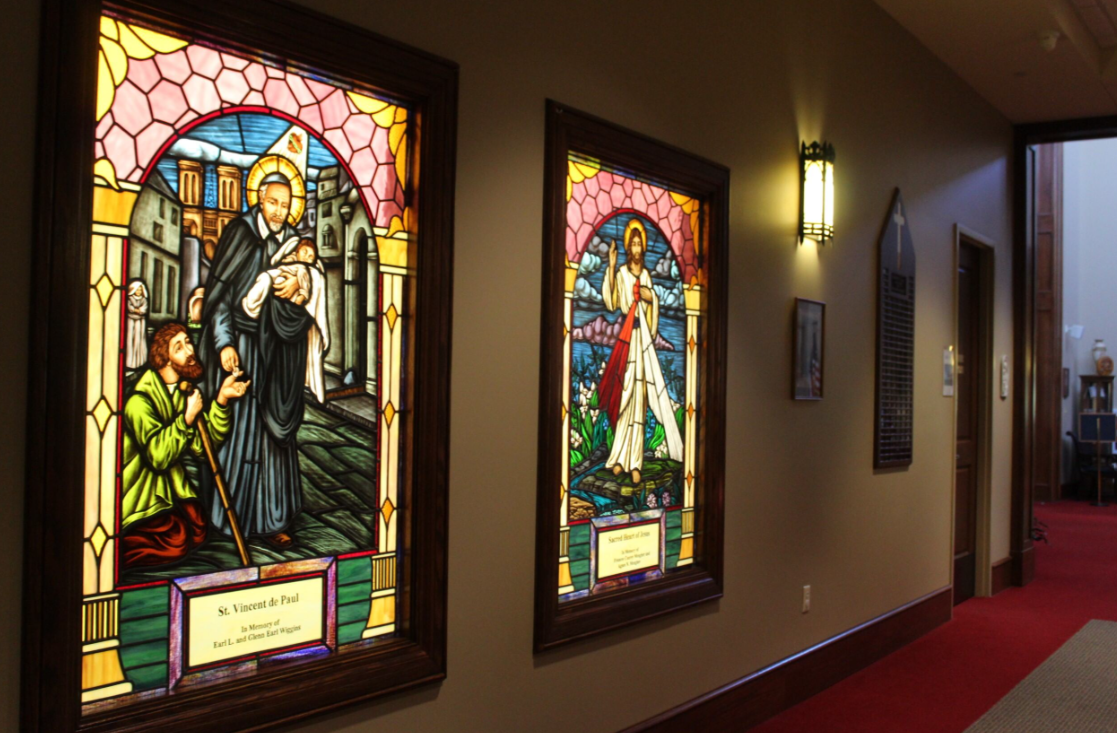
Surrounded by saints