The Next Chapter of School Choice in Alabama: Understanding the Education Freedom Tax Credit
Beginning January 1, 2027, a new federal opportunity will expand educational options for Alabama families while creating new ways for donors to support students and schools across the state.
What It Means for Alabama Donors
For years, Alabama taxpayers have supported educational opportunity through the state's Accountability Act tax credit scholarship program. Now, eligible donors will have an additional way to support students through a federal tax credit.
The EFTC provides:
- A federal tax credit of up to $1,700 per tax return
- A dollar-for-dollar reduction in federal tax liability
- An opportunity to support scholarships for Alabama students
- A way to keep education dollars benefiting local communities and families
One unique feature of the EFTC program is that donors have the ability to direct their contribution to a specific participating school. For donors who are passionate about supporting a particular school, community, or educational mission, this provides a direct way to invest in the success of that institution while helping families access the educational opportunities that best meet their needs.
Whether supporting a local independent school, faith-based school, or other participating educational institution, donors can play a meaningful role in expanding access for students while strengthening the schools that serve their communities.
What It Means for Alabama Families
One of the most significant aspects of the new federal program is that eligibility is based on Area Median Income (AMI) rather than the criteria used by Alabama's CHOOSE Act or Accountability Act scholarship programs. Families with household incomes up to 300% of Area Median Income may qualify.
For many Alabama families, this means eligibility could extend well into the middle-income range.
Estimated 2025 Income Limits for a Family of Four
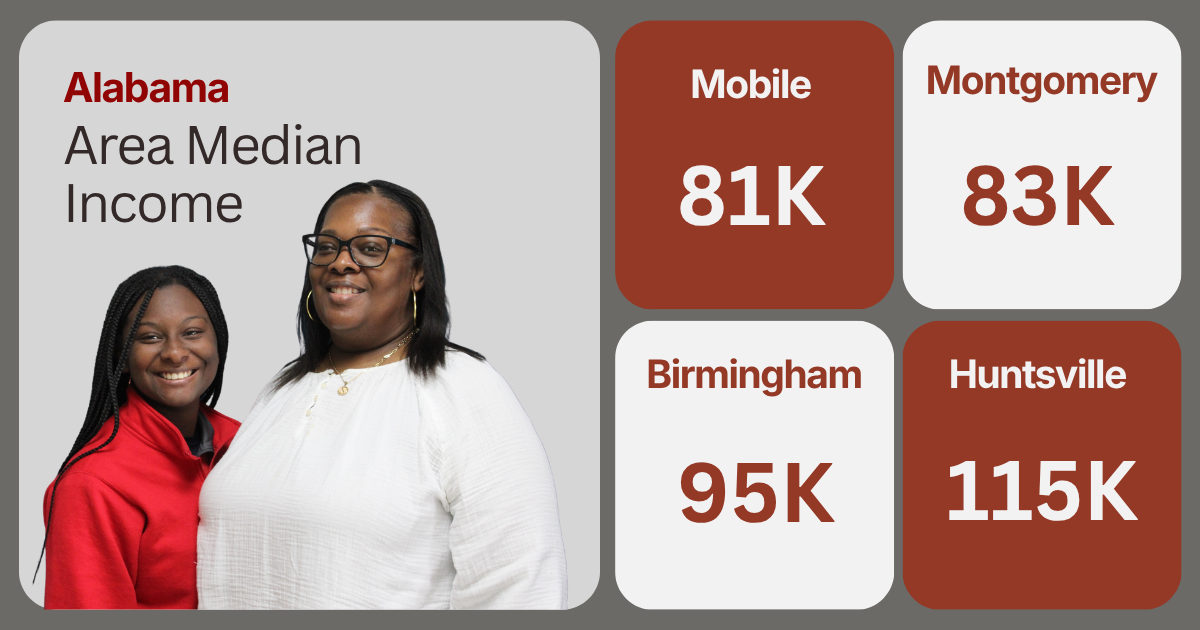
Because AMI varies by region, eligibility thresholds are different across the state. This means many families who may not qualify for other scholarship programs could qualify for assistance through the federal Education Freedom Tax Credit program.
In addition to private school tuition, scholarships may be used for a variety of educational expenses, including tutoring, instructional materials, educational therapies and other approved learning costs.
What It Means for Alabama Private Schools
The federal tax credit presents an opportunity to reach more families and strengthen enrollment.
As more scholarship dollars become available, schools may be able to:
- Expand access for families who previously could not afford tuition
- Increase enrollment by serving a broader range of students
- Build more diverse student populations
- Invest in academic programs, staffing, and student services
- Meet growing demand for educational options across Alabama
Schools that are already serving scholarship students understand the impact financial assistance can have on a family's ability to choose the learning environment that best fits their child. Additional scholarship funding means more families may have access to those opportunities.
Looking Ahead
EFTC is designed to work alongside existing educational choice programs, not replace them. For Alabama families, that means scholarship funds may be layered with other available resources, including Accountability Act (AAA) scholarships and CHOOSE Act education savings accounts. This ability to "stack" funding can be especially meaningful for families of students with special needs, whose educational expenses often extend beyond tuition to include therapies, specialized instruction, tutoring, assistive technology, and other support services.
By creating another source of scholarship funding, the Education Freedom Tax Credit has the potential to help families bridge affordability gaps and access the educational environment and services their children need to thrive. For many Alabama families, it represents not just another scholarship opportunity, but greater flexibility to build an educational experience tailored to their child's unique needs.
As implementation details continue to emerge, the our team is ready to help donors, families, and schools understand how this new federal opportunity can expand educational access across our state.